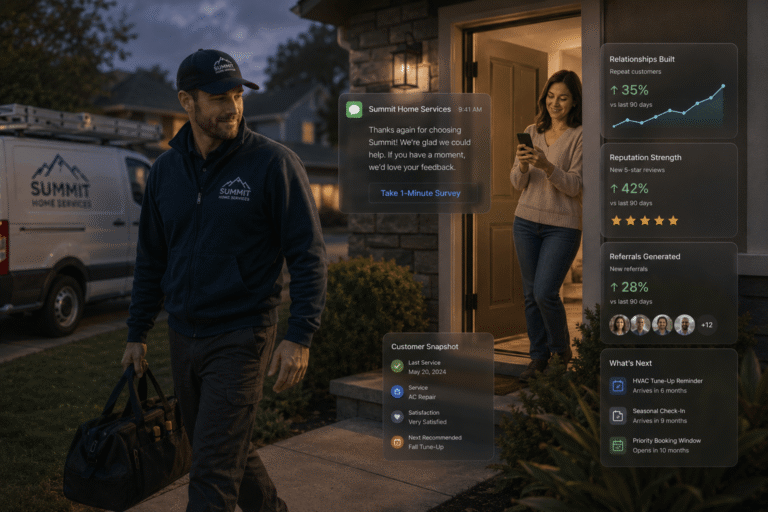
The hardest part of winning a home service customer is the first job.
You had to earn their trust before they ever let you through the door. Show up on time. Do great work. Leave the place cleaner than you found it. Hope the experience was good enough that when they needed the same service again, your name came to mind before anyone else's.
Most of the time it doesn't. Not because the work wasn't good. Because nobody stayed in touch.
That's not a customer loyalty problem. It's a communication problem. And it's one that costs home service businesses more repeat revenue than almost anything else.
The First Job Is an Investment, Not a Transaction
Every completed job represents real money spent on acquisition. Whether that's advertising dollars, referral relationships you've invested years building, or simply the operational cost of running a business that shows up and does good work, getting a new customer through the door isn't free.
A customer who books once and never comes back means that investment never fully paid off. The job covered its costs. But the relationship that should have generated years of repeat work and referrals never had a chance to develop.
The businesses that grow sustainably in the home service space don't treat completed jobs as closed transactions. They treat them as the beginning of something longer. Every satisfied customer who walks away after a great experience is a source of future revenue that only needs one thing to activate. A reason to call again.
Why Repeat Jobs Don't Happen Automatically
Here's what most home service business owners don't fully appreciate about their satisfied customers. Those customers genuinely intend to call again.
After a great lawn care visit, a homeowner thinks to themselves that they'll definitely use that company again next spring. After an HVAC tune-up that goes smoothly, the customer makes a mental note to schedule the same thing next year. After a carpet cleaning that exceeds expectations, the customer tells their spouse they found a company worth keeping.
And then life happens.
The note gets forgotten. The season changes and they're busy with other things. A different company's truck is parked down the street and they grab that number because it's right in front of them. A neighbor mentions they use someone else and the recommendation is easier to act on than trying to remember your company name.
The customer wasn't lost to a bad experience. They were lost to the absence of communication. Nobody reached out. Nobody made it easy to rebook. Nobody reminded them at the right moment that your business was still there and still worth calling.
That's not a failure of the customer. It's a gap in the system.
The Window Between Jobs Is Where the Relationship Lives or Dies
For home service businesses, the space between the first job and the next booking is the most important and most neglected part of the customer relationship.
It's where trust either gets reinforced quietly over time or fades until the customer can't quite remember your company name when someone asks if they know a good plumber. It's where the goodwill built during a great service visit either gets converted into long-term loyalty or dissolves into the general noise of a busy homeowner's life.
Most businesses do nothing in that window. The job closes, the invoice gets paid, and the customer goes silent until they need something again. By that point the relationship has cooled enough that the outcome is essentially a coin flip.
The businesses that do something simple and relevant in that space win the repeat job almost every time. Not because they're better at the work. Because they stayed present when everyone else disappeared.
What Staying in Touch Actually Looks Like
This isn't about texting customers constantly or running aggressive re-engagement campaigns that make people feel like they're on a marketing list.
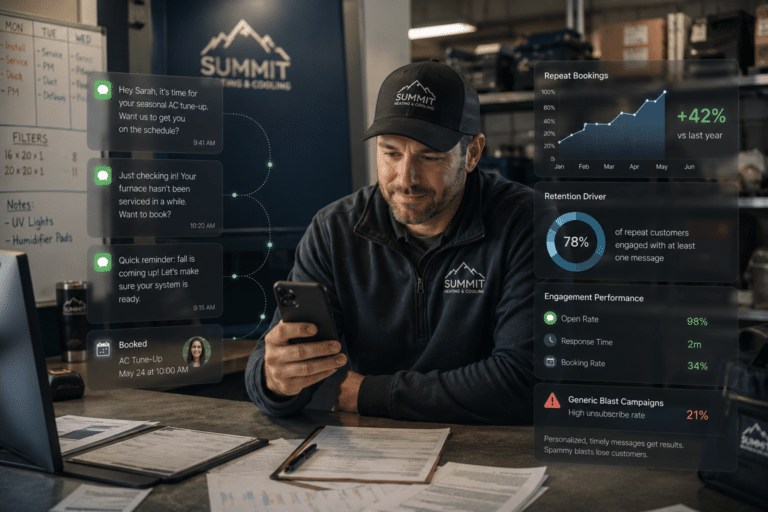
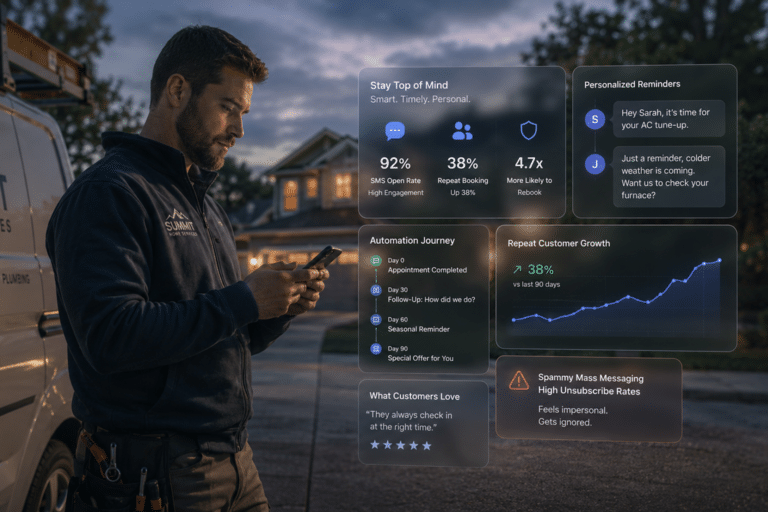
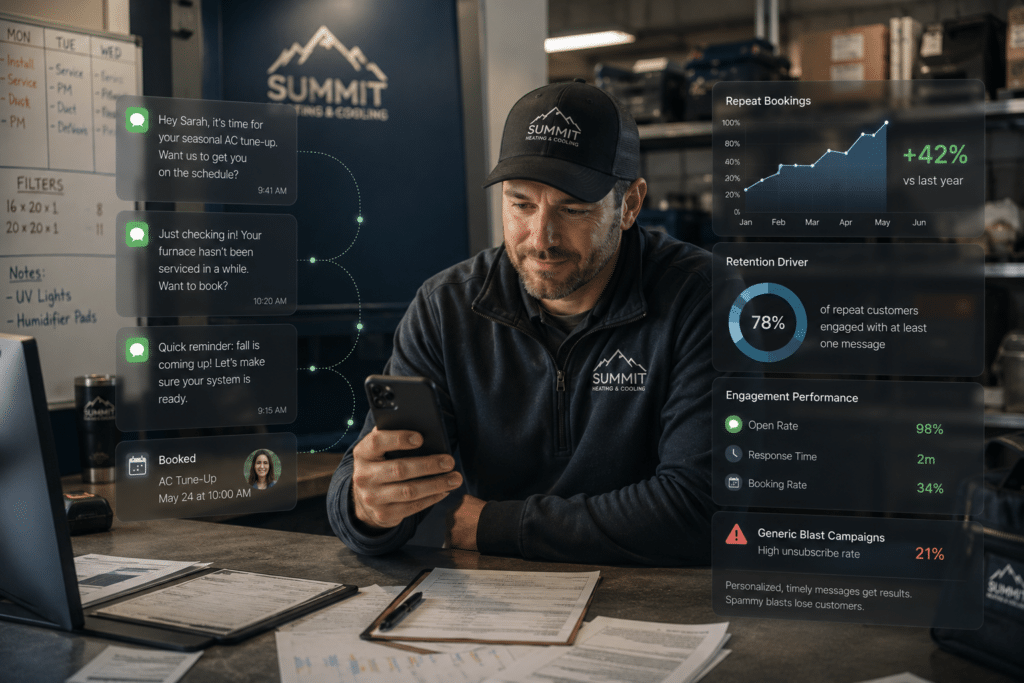
It's about one or two well-timed, relevant messages that remind the customer your business exists at exactly the moment they're most likely to need you again.
A seasonal reminder that arrives when the weather changes and the customer's last HVAC service was nine months ago. A check-in message tied to the anniversary of the previous cleaning that makes rebooking as easy as replying to a text. A simple note that says it's been a while and offers an easy way to get back on the schedule without the customer having to dig through their phone for your number.
These messages don't feel like marketing because they aren't. They feel like a business that pays attention. And customers respond to that because it's rare enough to be noticeable.
The bar in home service for staying connected between jobs is genuinely low. Most businesses do nothing. A single well-timed message puts you ahead of nearly every competitor in your market.
The Compounding Value of a Repeat Customer
It's worth stopping to look at the actual math here because most home service business owners underestimate how significantly repeat customer value compounds over time.
A customer who books once is worth one job. A customer who books every year for five years is worth five jobs. But it doesn't stop there. That same customer, over five years of consistent positive experiences, is also a referral source. They mention your business to neighbors. They answer yes when someone in their community asks if they know a good electrician, plumber, or lawn care company. They leave a review without being asked because the relationship has been maintained long enough that they feel genuinely connected to your business.
The difference between the one-time customer and the five-year loyal customer is often nothing more than whether the business stayed in touch between visits. Not aggressively. Not constantly. Just consistently enough to make rebooking feel easy and natural when the time came.
That delta in lifetime customer value is significant enough that even a modest improvement in repeat booking rate has an outsized impact on annual revenue. The customers are already there. The work has already been done. The only thing missing is the follow-up that turns a completed job into the first step of a long-term relationship.
Why Manual Follow-Up Doesn't Work at Scale
Every owner running 10, 15, or 20 jobs a day understands this problem without needing it explained.
There is no realistic way for an office team that is already managing scheduling, dispatch, customer calls, and everything else that comes with a busy operation to personally track every customer's service history and send the right follow-up message at the right time. It doesn't matter how organized the team is or how committed they are to customer communication. At volume, manual follow-up breaks down. Things get missed. Busy days become busy weeks and the follow-up that should have gone out in October is still sitting on a mental to-do list in December.
The businesses winning at repeat work aren't doing it manually. They've built systems that track service history, identify the right moment to reach out, and send the right message automatically without anyone on the office team having to remember.
When that process is automated, the repeat job doesn't depend on someone's memory or bandwidth. It depends on the system working correctly. And a system that works correctly every time, for every customer, regardless of how busy the week gets, is what turns a good home service business into a great one.
Stop Leaving Repeat Jobs on the Table
Chatavise Marketing Suite connects directly to your field service system and automatically stays in touch with past customers at the right moment via SMS. Seasonal reminders, maintenance check-ins, re-engagement messages, and referral prompts all happen without any manual work from your office team.
The customers are already there. The trust has already been built. Chatavise makes sure the repeat job follows.
Schedule a demo today and see how much repeat revenue your business has been leaving on the table.